
"A teacher is a compass that activates the magnets of curiosity, knowledge and wisdom in students". EverGarrison
jueves, 26 de mayo de 2016
ARTICLE WITH EXPERIENCES ABOUT POLITICAL
Today we will talk about
our experiences by an interesting article “Resolución de conflictos en la
escuela: una herramienta para la cultura de paz y la convivencia” (2000).


miércoles, 25 de mayo de 2016
POLITICAL EXPERIENCE ON OUR LIFES AS STUDENT
Here we will explain our own political experience on
our Schools, how teachers should punish us (“partes” basically).
 The
sanctions could be two possibilities, depending on the character of the teacher
or the headmaster this day. One of them was put you a sanction and, if it was
really big, you should get your book bag and go home, or if it was less
important, you accumulated them and with 3 sanctions, you had no more
possibilities, you should leave the school at least three days. Another case
was, the teacher put you a “punishment” that was: you have to pick up all the
trash that was in the playground in the presence of all your classmates, that
they was laughing at you, typical. Another sanction that we cannot forget
because it is important too, is: if you had been something wrong, you have to
erase all the blackboard of all the school.
The
sanctions could be two possibilities, depending on the character of the teacher
or the headmaster this day. One of them was put you a sanction and, if it was
really big, you should get your book bag and go home, or if it was less
important, you accumulated them and with 3 sanctions, you had no more
possibilities, you should leave the school at least three days. Another case
was, the teacher put you a “punishment” that was: you have to pick up all the
trash that was in the playground in the presence of all your classmates, that
they was laughing at you, typical. Another sanction that we cannot forget
because it is important too, is: if you had been something wrong, you have to
erase all the blackboard of all the school.
But
it was during our high school’s experience because, when we was at school, all
it was different. It did not exist the sanctions, which it is not true, but
teachers do not send you home, only they should punish you doing activities
like in high school as pick up the trash. On pre-school we had no sanctions,
only the teacher should say us: “you can’t do this, this is not good”. And
generally, we complied with the teacher.
Regarding
to the subjects we had on school, we coincide too. We basically say this
because we had the same subjects. It depended on the teacher who teaches this.
Teachers should use the same method to impart his/her lection and, they
coincide doing it with the most boring way. It was: all the students are sitting
on a desk alone, because we can talk. Each and everyone have to open his/her ears
as much as possible and pay attention to the teacher all time he/she is
talking, without saying a word. Some of the students should slack off and
occasionally, fall sleep.

So,
to sum up, we think the school should be a place to go motivated and with
attitude to learn. Today, it is true that students normally study less than
before but it is not his/her fault, because some teachers help us to fall in
the dropout. Less punishment and more teach following the right way.
ARTICLE ABOUT CULTURE AND THE RELATION WITH OUR EXPERIENCE.
Now it’s the turn to culture and we’re going to contrast our experience in the last post with the article we propose now: “De la Cruz, F.M. (Abril de 2009). La necesidad de la educación en valores en la educación primaria. Innovación y experiencias educativas, 17, 1-12.”
First of all we think and agree with the article that the school has to be capable of mix the formation of the moral personality with the cognitive development of each teaching. Moreover, the school has to make a social dimension that parallel demands the implication of the educative community and here we can include the parents to.
The teacher has an important role on the value transmission. As we said in our experience we had some different types of teacher, the most of them were traditional but there were some that taught to us some important values like the tolerance or the respect. We agree with the article that we must pay attention to values and we must make strategies to show them to the students. So it’s demonstrated that the teacher could be a very potential weapon to influence on the children because he or she will influence on the student behaviour and all this because the teacher is someone relevant to the student. The teacher must help the student on his or her personal experience to help to find their personality or the good values that will accompany them along their lifes.

Traditional teachers don't help to the incorporation because they teach without realizing the concrete needs of each one of his pupils: “...la escuela está adoptando el modelo productivo de la fábrica o de la empresa: estamos tratando al alumno como si fuera un producto industrial…”. In our opinion this is a mistake of the school, due to the fact that it doesn´t promote that the children with needs join his class, but it does it by means of special classes. With this to what it is stretched it is that the children see those partners as someone lower than they. From our point of view we think that this one must remove the special classes, in order that they learn of all, they should know that the whole world is like they without any discrimination.
On the other hand, according to the article: “ Esto no se arregla poniendo a un especialista en valores o con una asignatura de ética y de valores” .This is the solution that gives the school to learn to respect the others equally is the implantation of a subject that teaches the values necessary for this. In our opinion this solution is a waste of time, because it isn't necessary to make other subject for it. We think that it has a easy solution, which starts without any special class. This solution continues with a improvement of the teachers at school, they should teach to the students good behaviours which after children will use on their lifes.
Although the school hasn’t the whole load because the role of the parents are important for the solution too, but how should they do it? Since children are small parents should teach them how to behave correctly but we know that nowadays society with parents isn’t good at all. Although we wanted to transmit the importance that they had on their children, they spend a lot of time together so is important to teach them good values too.
And what about the different culture between pupils? we add here our own comment because we think that is really important the diversity between students in the class so in that way they can share a lot of different things with their classmates and they'll learn so much about other cultures that aren't theirs. They'll learn to tolerate each other too and everything will be better for the society.
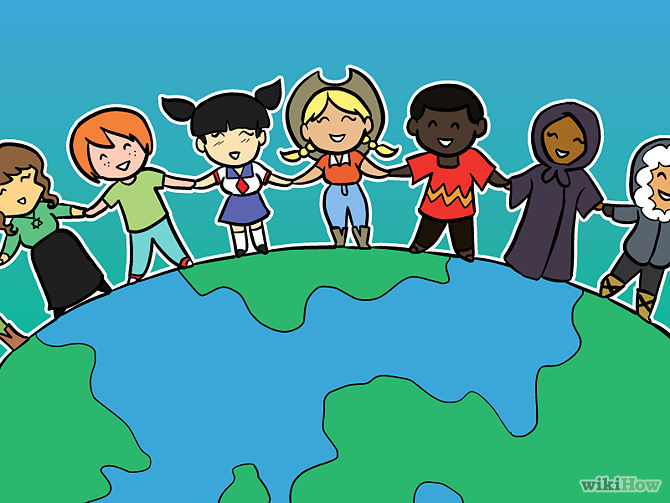
Finally, we guess that this enormous task the school and the family help can develop it.
We hope you like it!!!!
The teacher has an important role on the value transmission. As we said in our experience we had some different types of teacher, the most of them were traditional but there were some that taught to us some important values like the tolerance or the respect. We agree with the article that we must pay attention to values and we must make strategies to show them to the students. So it’s demonstrated that the teacher could be a very potential weapon to influence on the children because he or she will influence on the student behaviour and all this because the teacher is someone relevant to the student. The teacher must help the student on his or her personal experience to help to find their personality or the good values that will accompany them along their lifes.
Traditional teachers don't help to the incorporation because they teach without realizing the concrete needs of each one of his pupils: “...la escuela está adoptando el modelo productivo de la fábrica o de la empresa: estamos tratando al alumno como si fuera un producto industrial…”. In our opinion this is a mistake of the school, due to the fact that it doesn´t promote that the children with needs join his class, but it does it by means of special classes. With this to what it is stretched it is that the children see those partners as someone lower than they. From our point of view we think that this one must remove the special classes, in order that they learn of all, they should know that the whole world is like they without any discrimination.
On the other hand, according to the article: “ Esto no se arregla poniendo a un especialista en valores o con una asignatura de ética y de valores” .This is the solution that gives the school to learn to respect the others equally is the implantation of a subject that teaches the values necessary for this. In our opinion this solution is a waste of time, because it isn't necessary to make other subject for it. We think that it has a easy solution, which starts without any special class. This solution continues with a improvement of the teachers at school, they should teach to the students good behaviours which after children will use on their lifes.
Although the school hasn’t the whole load because the role of the parents are important for the solution too, but how should they do it? Since children are small parents should teach them how to behave correctly but we know that nowadays society with parents isn’t good at all. Although we wanted to transmit the importance that they had on their children, they spend a lot of time together so is important to teach them good values too.
And what about the different culture between pupils? we add here our own comment because we think that is really important the diversity between students in the class so in that way they can share a lot of different things with their classmates and they'll learn so much about other cultures that aren't theirs. They'll learn to tolerate each other too and everything will be better for the society.
Finally, we guess that this enormous task the school and the family help can develop it.
We hope you like it!!!!
CULTURE
In the section of culture we have
focused on the traditions and values in school.
We think is so important that every
teacher should give to their students lessons of tolerance, respect, help to
the others, love…Most of us have had teachers who have
not taught us any values.

Teachers should stop being so traditional and start being more practical
and modern when they are teaching.
This is not to say that traditional teachers are worse than the modern
ones.
Over the years we have spent in school most of our teachers have been
traditional (which that not means that it is bad). We always learn something.
For example one of us had a teacher in school for four years that was
traditional but at the same time she taught her students many values such as
respect for others. Or another one had a teacher the last two years of school
that for her was the worst at that time (the teacher was a very old man about
to retire so strict and not at all friendly) , but once the years passed she
realized that actually this teacher had taught her how to face situations under
pressure and he taught her to have a habit of study.
Sometimes it's more important to learn things that are going to be needed
in the future but we are convinced that all these
things can be learned in a more fun and not as pressure and stress way.

To
sum up we believe that traditional and strict teachers which are anchored to
the past ways of teaching should realize that we are in the 21st
century. They do not have to radically
change their way of teaching, but to introduce a little more modern teaching
according to the era we are living at the same time that they have to transmit
values to their students are going to need both inside and outside school, in
society and in life in general.
Bye!!!
Bye!!!
martes, 24 de mayo de 2016
ARTICLES WITH OUR EXPERIENCE ABOUT SOCIAL
In this post we will also talk about the social aspects in the school with different articles. We decided to divide in various areas.
In the first place, the relationship between teachers and pupils. As we discussed in our experiences, we think that the most of the teachers are inefficient and they don’t carry out really their work like teacher, because they are limited to give their theory class or to tell their lives without really worrying about the student.

In our opinion, the teacher has an important role in the child’s life so they must to change the attitude and make sure the student has a central role. Especially they must to pay attention to those pupils who live in a poor ambient or other unfavourable situation. We read an interview to Ivor Goodson. This talk about several issues, one of them is the power which has the teacher about that we talked before. “Es el profesorado el que puede marcar la diferencia incluso en situaciones sociales inhóspitas y contradictorias. El profesorado, si insiste puede alcanzar cierto poder, una especie de mediación; incluso cuando las políticas y las posiciones del poder son contrarias, existe una posibilidad, debido a la naturaleza de los docentes, al afecto, que puede actuar como sustento en las clases” (Ivor Goodson, 2000). Además, añade “la profesión docente, si ha de ser recordada como socialmente importante, se tiene que dirigir no solamente a sobrevivir en una clase o impartir el contenido de una asignatura. Aunque ésta es una parte significativa, no resulta suficiente. El profesor o profesora debe pasar de una competencia técnica a una competencia social, la cual requiere tomar conciencia de su misión social. Creo que los mejores profesores no son formalmente conscientes de esto; llevan dentro una fuerte pasión, la de creer por encima de todo en la misión de enseñar. Y eso es lo que creo que deberían hacer los sindicatos docentes, ayudar al profesorado con un fuerte sentido de su competencia técnica para alcanzar la competencia social. La enseñanza es una profesión maravillosa si podemos equilibrar las competencias técnicas con las sociales”.
Estamos totalmente de acuerdo con ello, es lo que explicábamos anteriormente. Pensamos que la relación entre el docente y el alumno debe cambiar mucho en la actualidad y debe haber un ambiente más fluido en el que se impartan valores sociales.
In connection to the theme school-family, we read an article that it talks about that and we think it is very interesting. We think that in the present, this relation is broke and maybe is like two worlds completely different and separates. As we talked in our experiences, the most of the teacher only have in mind to parents when the pupil has a bad behaviour.
The education and the personality of the children are influenced for the family and the school, so the two parts have to be together so that the children have an effective progress. In our opinion, the education in the present is bad in this. The parents have a lot of work and many times they don’t have time to educate in a well way their children, so they leave all the responsibility to the school. Also, in other part, many teachers are limited to teach their subject and they are neglectful of other things that should instil in students, for example, the values or the identity.
Abelló, L. (2007) considera que la función de los padres en la educación de sus hijos debe estar reconocida socialmente para que el poco tiempo que tienen por culpa de los horarios laborales no les impida educar bien a sus hijos. En esto estamos totalmente de acuerdo, tendríamos que cambiar la mentalidad de la sociedad y dar mucha más importancia a la educación de los niños por par tanto de los padres como de la escuela, ya que de su educación dependen muchas dimensiones del futuro. Ni los padres pueden darle todo el cargo de la educación a la escuela, ni viceversa.

En definitiva, debe haber un cambio de mentalidad, y tanto la escuela, como los padres, deben ir en una misma y única dirección.
Reference:
- Abelló, L. (2007). La participación de las madres, padres y tutores en la escuela del siglo XXI. Aula de Innovación Educativa, 15(160), 43-45.
- Goodson, I. (2000). Recuperar el poder docente (entrevista con F. Hernández).Cuadernos de Pedagogía, 295, 44-49.
miércoles, 18 de mayo de 2016
OUR SOCIAL EXPERIENCE IN SCHOOL
Today we begin the day with new experiences in the social area inside the school. What is exactly the social thing inside it?
We think that it includes the relations between the pupils, teachers and parents, due to the fact we made the concept of relationship. It is the one that more defines it. Inside this one, relations are the competition between classmates, the stress for the exams, the companionship.
Now we start with some of our experience, which we decided to divide in two parts:
Teachers-pupils
Here we explain how our relation with our differents teachers was, how our classes were (dynamic or boring) and how the relationship between our parents and teachers was.
In our experience we can distinguish differences teachers:
Kind.
Boring.
Serious.
Innocent.
On school there were more helpful and kind teachers in contrast with high school that there were more boring teachers. But all of them weren’t the same. Although there were teachers who were closer than others and their classes were more comfortable.
In addition to others teachers were on their own, they didn´t give us any attetion. With these type of teachers we have to be in absolutely silence and they sat us individually, this type of professors we used to be afraid.There were some teachers of this kind who used to insult students.
Not all the high school teachers were boring or bad, because there were some teachers who were like friends. Due to we celebrated theirs birthdays party. One of us currently keeps friendship with one of his teachers at the Institute, because he was worried about getting along with their pupils. For some of us high school were more traditional than school and teachers didn’t help like they did at school. On this way, there were others who didn’t teach theirs subjects, because they told us their lives or problems with their relatives. On the other hand, there were teachers who everyone was laughing, we were always in the classroom talking and we could copy in their classes, these types of teachers used to us to warn with expulsions.The last one couldn't impose respect.
On the other hand, we used to have a lot of exams, of which we do not remember anything, since we had to memorize.

Regarding the relationship of teachers with parents, we can say that not all teachers were legal, because they always used to call the family when we did something wrong, in this way encouraging a poor relationship with parents.
Often our parents had to go to talk to them since we suspended without reasons, and then used to rectify. One of us remembers that once did something wrong at the Institute, and the teacher called his mother screaming you.
Classmates
Here we explain how were our relationship with our classmates.

Of our experience with our classmates we can say that it has been very good, since we were a small family, for the simple fact from which we were passing more time with them that with our own family.This owes to itself to which we were in the habit of doing activities that were joining us very much, for example the trips in which we were spending it to ourselves very well singing in the bus. Although not with all we were removing well because there were some of them who believed themselves better or superiors that others, but in the bottom they were our friends. These relations were very closed, due to the fact that we stayed a lot of hours so we made a lot of friends. We used to get along with them but obviously we have our group of friends.
Today this is all, see you soon!!
HOW CAN WE CHANGE THINGS?
In this post we're going to talk about our own experiences and how we or other teachers in the world can change it.
In Spanish is explained what we had to do and in english the content. We hope you like it!

ALTERNATIVES


In Spanish is explained what we had to do and in english the content. We hope you like it!
WORK
- Experiencias que no cumplen con capacidad de los estudiantes y atención a la diversidad.
- Formular una alternativa diferente y realista que no reproduzca lo negativo.
ENTRADA
Wednesday 27th of april, in our organization class we were proposed to write our experiences where teachers didn't do well their job so we have to propose what, how and which methodology or strategy we would used if we had been them.
EXPERIENCES
In physical education one of the tests that we had to do was being 45 minutes running without any stop, you only had the chance to stop once less than 2 minutes. This test cost 2 points of the final note and not everybody had the physical capability of hang all this time. Many students stopped because they couldn’t advance and the teacher didn’t do anything.
In arts we had a drawing notebook in which there were a lot of templates to paint and draw exactly the picture that shows on the example. You can’t draw or paint as you want so no one had the liberty to do what they want. If you didn’t do it right you had a bad mark but if you did exactly the same you got a high mark. We think that this subject shouldn’t be like it because every student should do what they want based on their creativity.
We were obliged in music lessons to play the flute everyday and teachers believed that everybody was able to play it well. A lot of students didn’t know how to play it so it influenced in the mark later. These teachers didn’t attend to students that were more needy and so they need more time to learn how to use it. Teachers should give more attention to this things so in that way students get a better mark at the end of the course.
ALTERNATIVES
In physical education we can do the next things: the ones who aren’t in a good physical form could stop more times in the test or run less time. Also we think that the mark shouldn’t have so influence, we have to give more importance to the participation, group games, effort, attitude… This is the appropriate to do because everyone born with a different physic capacity, if not everybody could do it is a bit exaggerated 2 points of the final mark so this test could value less. Each one is good in a thing and we can’t desmotivate a student because he or she isn’t capable to do something.
In arts, the teacher should give to the students a template with an example of what they have to do that could guide them but not obligate to do exactly the same. We can propose them to do something different too. It’s not worth it that they copy exactly the same, every child is different and we have to give them freedom so they learn by themselves. We think that is good on primary stage that children let free their imagination so their creativity increase second by second. We could propose similar activities but each one could do whatever they want.
In music, teachers could teach better how to use the flute. They should pay more attention to children that don’t know how to play it. Something that teacher could do is let the students play the instrument they want that is on the class so in that way children would learn more instruments and they wouldn’t be worried at all about their marks.
These are the alternatives which we think are the best ones.
If you don't agree about what we propose, you can add a comment and give us your opinion, thank you everyone!!!!
ARTICLE WITH OUR EXPERIENCE ABOUT MANAGEMENT.
In relation to the education magazine and the article: 'The role of school organization in educational change: the inertia of the status quo' we brought out some information to compare and analyze with our information that we posted previously. We separated the last post in 3 stages but today we're going to talk in generally. At the end of this post we'll put the link to access to this article.
Firstly we agree that the organization or management adquires an instrumental character. It's not part of the learning desing and it doesn't envolve the pedagogics sciences but it's important for the practical realization. A lot of traditional manuals had some importance on the furniture or audiovisuals.. or maybe with the 'group dynamics'... You can see as we wrote in the last post about managament how we gave importance to the furniture, how the class was decorated or even the blackboard we used, so at the article said maybe we were engaged to a traditional organization.

"Las actividades de las organizaciones educativas no determinan la forma de la organización, sino más bien esta forma viene impuesta por el ritual de certificación y por los acuerdos que se toman desde el entorno" (Weick,1988,p.69)
Moreover, a good management inspires a definition of reality. It creates a social stage. The educational intervention can't ignore the organizative. Like we said before it's not part of the pedagogy but it's part of the rules of the school so we can't avoid it.
Although many teachers are attached to the organization of the system and the school, so in that way they don't create new things to help their students. They're like stuck in a no renovate management. You can see our experiences with teachers during the time and it wasn't always the same, we agree like in the article that there're going to be two types of teachers: the traditional ones and the "cool"ones. So... is the problem on teachers? or is it on the organization? We think that it could be on both parts because a teacher could do what he or she wants while it's justify and it doesn't break the law or the school organization. But in part the school has blame too, because if it has an old and traditional management maybe working in their environment and looking to what they can change, they can make it better.
«Me inclino a creer que la cualidad clave que se necesita en una escuela, si ha de producirse un desarrollo, es la capacidad de reflexión. Es decir, una capacidad para revisar con sentido crítico y de un modo reflexivo los propios procesos y las propias prácticas... Sería posible lograr una base paralela para reflexionar, mediante una investigación y un desarrollo basados en el propio programa de la escuela referido al servicio de perfeccionamiento interno» (Stenhouse, 1984, p. 234)

Finally we found a web of the University of Seville that explains the content of school organization and we think that it's a good link to understand in what parts 't is divided and what the school do.
http://ocwus.us.es/didactica-y-organizacion-escolar/organizacion-del-centro-escolar/temas/1/pagina_06.htm
Article: Maroto, J.L.. (2011). El papel de la organización escolar en el cambio educativo: la inercia de lo establecido. Revista de Educación, 356, 41-60.
See you soon!!!!!!
Firstly we agree that the organization or management adquires an instrumental character. It's not part of the learning desing and it doesn't envolve the pedagogics sciences but it's important for the practical realization. A lot of traditional manuals had some importance on the furniture or audiovisuals.. or maybe with the 'group dynamics'... You can see as we wrote in the last post about managament how we gave importance to the furniture, how the class was decorated or even the blackboard we used, so at the article said maybe we were engaged to a traditional organization.
"Las actividades de las organizaciones educativas no determinan la forma de la organización, sino más bien esta forma viene impuesta por el ritual de certificación y por los acuerdos que se toman desde el entorno" (Weick,1988,p.69)
Moreover, a good management inspires a definition of reality. It creates a social stage. The educational intervention can't ignore the organizative. Like we said before it's not part of the pedagogy but it's part of the rules of the school so we can't avoid it.
Although many teachers are attached to the organization of the system and the school, so in that way they don't create new things to help their students. They're like stuck in a no renovate management. You can see our experiences with teachers during the time and it wasn't always the same, we agree like in the article that there're going to be two types of teachers: the traditional ones and the "cool"ones. So... is the problem on teachers? or is it on the organization? We think that it could be on both parts because a teacher could do what he or she wants while it's justify and it doesn't break the law or the school organization. But in part the school has blame too, because if it has an old and traditional management maybe working in their environment and looking to what they can change, they can make it better.
«Me inclino a creer que la cualidad clave que se necesita en una escuela, si ha de producirse un desarrollo, es la capacidad de reflexión. Es decir, una capacidad para revisar con sentido crítico y de un modo reflexivo los propios procesos y las propias prácticas... Sería posible lograr una base paralela para reflexionar, mediante una investigación y un desarrollo basados en el propio programa de la escuela referido al servicio de perfeccionamiento interno» (Stenhouse, 1984, p. 234)
Finally we found a web of the University of Seville that explains the content of school organization and we think that it's a good link to understand in what parts 't is divided and what the school do.
http://ocwus.us.es/didactica-y-organizacion-escolar/organizacion-del-centro-escolar/temas/1/pagina_06.htm
Article: Maroto, J.L.. (2011). El papel de la organización escolar en el cambio educativo: la inercia de lo establecido. Revista de Educación, 356, 41-60.
See you soon!!!!!!
miércoles, 4 de mayo de 2016
PROYECTO EDUCATIVO
Hoy en clase hemos estado hablando sobre los proyectos educativos de nuestros colegios. Para ello, hemos escogido uno de nuestros colegios, “Nuestra Señora del Carmen” (San Fernando, Cádiz).

Este colegio está basado en la pedagogía de Joaquina de Vedruna, la cual fue una maestra de generaciones jóvenes, especialmente en el mundo rural. Hoy en día, se ha convertido en un claro ejemplo a desarrollar en gran parte de los centros religiosos. Por ello, en la actualidad el apellido familiar de Vedruna, queda asociado educativamente a un modo de presencia con identidad y estilo propios y a una forma de dar respuesta a las necesidades educativas de su tiempo.

- MANAGEMENT
La comunidad educativa es la estructura clave en la cual todas las personas que la integran hacen su aportación específica al servicio del Proyecto. En coherencia con su modelo educativo crean estructuras organizativas que favorezcan la vivencia de los valores que perseguimos.
• Estructuras integradas en la comunidad humana a la que pertenecen, trabajando en red con otras instituciones tanto cercanas, como lejanas.
• Estructuras generadoras de igualdad, abiertas a todas las personas desde la situación de las más débiles y con preferencia por ellas.
• Estructuras participativas, flexibles, funcionales y humanizadoras.
• Estructuras creadoras de espacios de reflexión e interiorización. Unas estructuras planteadas así son liberadoras y generadoras de un ambiente de alegría, donde se favorece el crecimiento y se dinamiza la capacidad para “hacer grandes cosas”.
*Currículum
La vivencia de estos valores supone por nuestra parte:
• Educar en la defensa de la vida.
• Fortalecer la Libertad.
• Vivenciar la justicia.
• Promover la Paz.
• Promover la Fraternidad.
• Alentar el sentido de trascendencia.
Los valores que destacan configuran su estilo educativo y deben impregnar la metodología, los contenidos y las estructuras de su oferta educativa, cuya pedagogía está basada en el AMOR.
- SOCIAL
En cuanto a las relaciones en este colegio, podemos encontrar las siguientes categorías según su proyecto educativo. Buscan el impulsar valores para hacer posible una vida humana realmente digna.
Una sociedad que sea:
- Fraterna y solidaria:
• Mantiene como aspiración el servicio, la generosidad y el compromiso
• Acepta y valora, apoya y defiende al diferente
• Es sensible al sufrimiento de los débiles
• Promueve relaciones de igualdad e interdependencia entre personas y culturas.
- Libre, responsable y creativa:
• Supera el sometimiento, la dependencia y la exclusión.
• Posibilita el crecimiento y desarrollo de los niveles de conciencia y comunicación
• Favorece la actuación libre de las personas sin presión, amenaza ni temor.
• Facilita a sus integrantes organizarse para asumir la historia colectivamente y construirla con creatividad.
En relación con la persona y su medio, encontramos los siguientes apartados
- Consigo misma: Una persona que aprenda de sus errores y así crezca y cambie por sí misma. Fiel a sus convicciones, a su conciencia profunda.Que sepa conocer sus límites. Capaz de reconocer y valorar su propia historia de vida, su cultura y los valores de su pueblo.
- Con las demás personas: Comunicarse con los demás de una forma respetuosa. Escuchar lo que los demás les dicen. Ser solidaria, fraterna y sensible con todos, pero sobretodo serlo con las personas que son ignoradas por la sociedad.
- Con el universo: Libre y responsable, capaz de una relación armónica con él. Promotora de la vida y de cuanto la garantiza para todas las personas más allá de su propio presente.
- Con Dios: Consciente de que Dios existe y se manifiesta en las personas y el mundo. Vive con esperanza la búsqueda del sentido de la existencia humana.
Por otro lado, desde el punto de vista metodológico la educación que proponen es la siguiente:
- Parte de la realidad y educa para la vida y desde la vida.
- Hace de la experiencia y de los saberes ya existentes el punto de partida para nuevos aprendizajes.
- Enseña más el “cómo”, el “por qué” y el “para qué” de los fenómenos y de la realidad y no simplemente el “qué” de los mismos.
- Valora los procesos, no sólo los resultados.
- Asume el error y afronta el conflicto como elemento pedagógico de crecimiento.
- Está integrada en su propio medio con proyección universal.
En coherencia con su estilo, la metodología debe ser:
- Inclusiva: Reconoce el derecho a la diferencia, el deber de posibilitar una igualdad de oportunidades y nos exige respuestas creativas para atender a la diversidad.
- Activa-Reflexiva: Por la que la comunidad educativa aprende en un sistema basado en el principio de “acción-reflexión-acción”.
- Participativa-Dialogante: Posibilita la libertad de expresión, de opción y la postura activa y responsable en la elección de objetivos y medios.
• Creativa- Innovadora: Desarrolla capacidades, fomenta la iniciativa personal y el pensamiento divergente en la búsqueda de nuevos caminos.
• Crítica-Liberadora: Analiza los acontecimientos y se sitúa críticamente frente a ellos.
- POLÍTICA
Los intereses que rigen en este centro son los siguientes que vemos a continuación:
- Fomentar la información, participación y corresponsabilidad de todas las personas implicadas en el proyecto educativo.
- Dar continuidad a la misión educadora avanzando en el proceso de transformación y adecuación de nuestros proyectos y estructuras al momento congregacional y a la realidad social.
- Dar nuevos pasos, desde diferentes plataformas educativas, para responder a la realidad de exclusión en los diversos países.
- Impulsar el trabajo educativo conjunto con las familias, potenciando el acompañamiento y las acciones formativas.
- Potenciar el trabajo en red, con el entorno y con las instituciones que desarrollan acciones educativas y sociales en el mismo.
- Seguir potenciando el proceso de Formación de Educadoras y Educadores Vedruna, a nivel de carisma y a nivel profesional, alentar la participación corresponsable y prever los recursos necesarios.
- CULTURE
Los valores que destacan deben ser tomados como contenidos de modo que atraviesen todos sus proyectos, programas y procesos.
La instancia educativa entra en un proceso de asimilación de las raíces y expresiones culturales de su pueblo. Para ello:
- Aprecia y defiende el patrimonio cultural reconociendo que es raíz de identidad y fuente de autovaloración personal y colectiva.
- Impulsa el diálogo intercultural para el enriquecimiento mutuo.
Interrelación universal.
La instancia educativa se relaciona y forma red social con otras instituciones que también se proponen el cambio social y está abierta a la realidad mundial. Para ello:
- Crea conciencia y se sensibiliza sobre la interdependencia mundial
- Participa en acciones conjuntas en la defensa de los Derechos Humanos y la Justicia.
- Forma en la conciencia ecológica y en el uso racional y responsable de los recursos mundiales.
Los valores que quieren destacar, porque consideran urgentes en esta sociedad, son:
• La vida
• Libertad
• Justicia
• Paz
• Fraternidad
• Trascendencia
REFERENCIAS:
Propuesta educativa Vedruna. http://carmelitas.vedruna1826.org/images/stories/pev.pdf
REFERENCIAS:
Propuesta educativa Vedruna. http://carmelitas.vedruna1826.org/images/stories/pev.pdf
Suscribirse a:
Entradas (Atom)